

Global take on politics news
Provided by AGP
Fair Start Movement Analyzes Harvard Animal-Welfare Baseline Disclosures
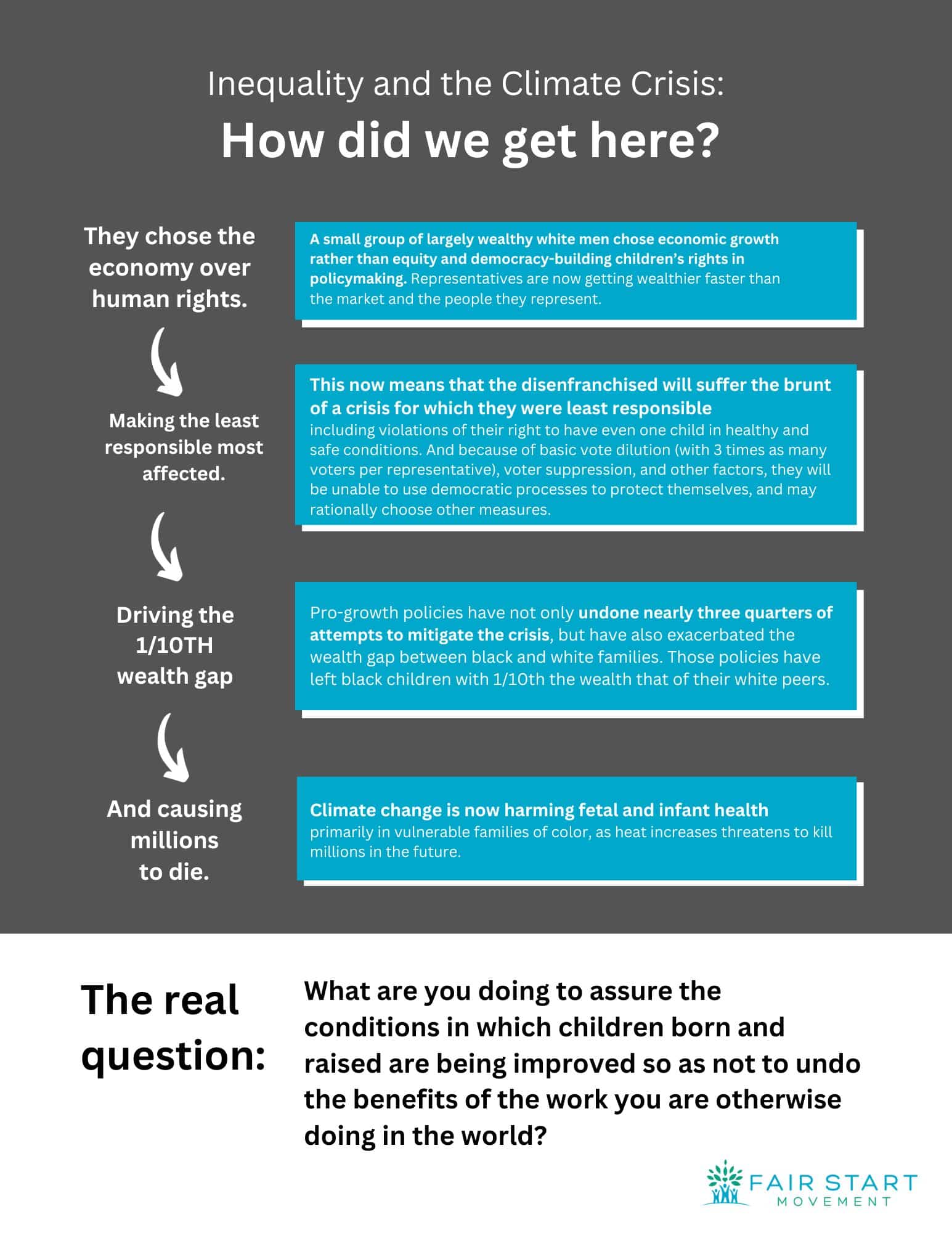
Question for Orgs
Analysis examines Harvard animal-welfare benefit language and how baseline disclosures can clarify public-facing impact claims.
What are you doing to assure the conditions in which children born and raised are being improved so as not to undo the benefits of the work you are otherwise doing in the world?”
BOSTON, MA, UNITED STATES, May 6, 2026 /EINPresswire.com/ -- Fair Start Movement and TruthAlliance.global announced a baseline-disclosure analysis of animal-welfare and public-benefit language used by Massachusetts institutions, including language associated with Harvard’s Brooks McCormick Jr. Animal Law & Policy Program. The analysis examines how public statements about animal protection, institutional activity, and public benefit can be made clearer through plain-language baseline disclosures.— Fair Start Movement
The analysis focuses on whether animal-welfare benefit language gives readers enough context to understand how institutional activities relate to broader statements about progress, benefit, protection, compassion, or systemic change. The purpose is to make those statements easier to evaluate by identifying the assumptions behind them.
The Harvard example is narrow. Fair Start does not state that Harvard fabricated outputs or acted with bad motive. The analysis concerns whether aspirational institutional language can create a directional impression of progress for donors, students, partners, policymakers, and the public when the background information needed to understand that impression is not stated in plain language.
Read the full story here: https://fairstartmovement.org/harvard-helped-create-a-fantasy-world-of-social-justice-undone-daily-by-birth-inequity/
Harvard’s animal-focused program states that it is committed to analyzing and improving the treatment of animals. Harvard’s public animal-program materials also state that the program is trying to prove that better animal welfare is good for everyone.
Fair Start states that those phrases are structured as intent and process statements, not completed outcome statements. The organization states that the ordinary public impression remains directional: that institutional support, student participation, donor attention, and public trust are attached to forward movement for animals.
“The question is not whether Harvard is doing work,” said Suriya Khan of Fair Start Movement. “The question is whether the public impression of progress is complete when the baseline is missing. If an institution builds trust through benefit language, audiences should be able to see what counts, what is excluded, what conditions may affect the stated direction of travel, and what information would require clarification.”
The analysis also identifies MSPCA-Angell and Humane World for Animals as additional examples. Fair Start states that MSPCA-Angell uses language such as “positively impacts the lives of tens of thousands of animals each year” and “drives meaningful, systemic change,” while its GuideStar profile states that a results metric is “no longer tracked.” Fair Start states that Humane World for Animals uses quantified statements involving plant-based meal transitions and hens affected by cage-free transitions, which may benefit from clearer baseline information to show how reported activities relate to broader statements of progress.
Fair Start’s approach is focused on clarity. Aspirational language is not inherently improper. Output metrics are not inherently incomplete. The issue presented is whether institutions that communicate progress, benefit, protection, compassion, or systemic change should also explain the baseline against which those statements are being understood.
The analysis describes baseline standards that distinguish program outputs from broader outcomes, explain modeling limits and relevant surrounding conditions, identify what populations and harms are counted or excluded, state the time horizon used, and explain what information would require narrowing, correcting, or qualifying benefit language.
Fair Start frames this as a practical clarity pathway, not punishment for imperfection. The proposed approach is straightforward: explain the baseline, separate outputs from broader outcomes, and make public-benefit language easier to evaluate before it shapes public understanding.
“Institutional integrity requires clarity about more than careful verbs,” said Ryan James Jessup JD/MPA, Institutional Integrity Expert. “If public language creates a directional impression of progress, the baseline should be visible. Clearer explanation helps donors, students, partners, and the public understand what benefit language means and what it depends on.”
The analysis also invites animal-welfare institutions to consider a voluntary baseline-reconciliation process using Fair Start’s Tell the Truth framework and FalseClaimsChecker.org as screening tools for public-benefit statements.
About Fair Start Movement
Fair Start Movement is a public-interest initiative focused on baseline clarity in public-benefit language. Through research, public education, and plain-language analysis, it examines whether institutions explain the assumptions and standards behind statements of impact, benefit, protection, sustainability, and related outcome-oriented language. FalseClaimsChecker.org is one of its public-facing projects.
Suriya Khan
FairStartMovement.org
+ +1 516-725-3157
email us here
Visit us on social media:
LinkedIn
Bluesky
Instagram
Facebook
YouTube
X
Legal Disclaimer:
EIN Presswire provides this news content "as is" without warranty of any kind. We do not accept any responsibility or liability for the accuracy, content, images, videos, licenses, completeness, legality, or reliability of the information contained in this article. If you have any complaints or copyright issues related to this article, kindly contact the author above.
